

Thinking of wrapping your car yourself? Learn how to avoid common DIY car wrap mistakes—like bubbles, creases, or paint damage—with pro tips, right tools, and the best film recommendations.
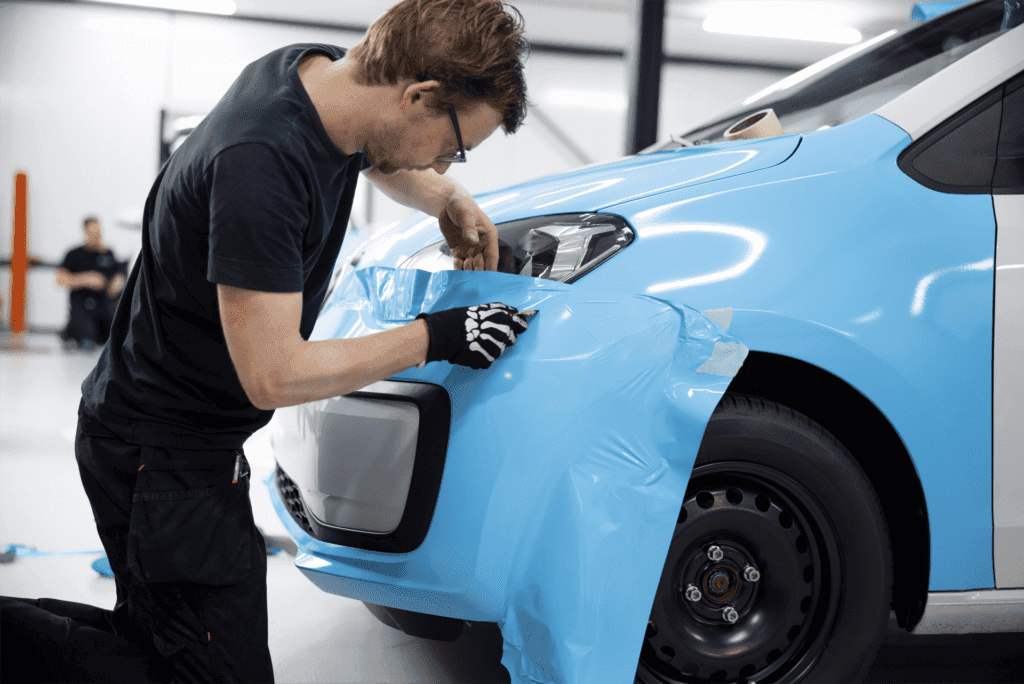
Why Do Many Car Owners Try DIY Wrapping?
DIY car wrapping is gaining popularity because it offers:
- Cost savings on professional labor
- A hands-on creative experience
- The freedom to change your car’s style anytime
- A sense of accomplishment and customization
But wrapping a car isn’t as easy as it looks. Without proper preparation, tools, and technique, failure is common—often resulting in peeling edges, trapped air bubbles, or worse: scratched paint.
Top DIY Car Wrap Failures & What Causes Them
| Failure Type | Common Cause |
| Bubbles or creases | Poor cleaning, wrong squeegee technique, no heat gun use |
| Paint scratches | Using sharp blades without a guide, cutting too deep |
| Edges peeling | Improper heat application, bad wrap tension |
| Glue residue | Low-quality film, wrong removal method |
| Misalignment | No guide lines, uneven tension while applying |
| Color distortion | Overstretching the film, uneven heat use |
TPU vs PVC Wraps: Choose the Right Material
TPU wraps (like those from CARLAS) are more forgiving and beginner-friendly.
| Material | Ease of Application | Self-Healing | Color Performance | Cost |
| TPU | ✅ High | ✅ Yes | ✅ Excellent | Medium–High |
| PVC | ❌ Lower | ❌ No | Average | Low |
🎯 TPU wraps are ideal for DIY because of their stretchability, flexibility, and support for both dry and wet installation methods.
Preparation Checklist Before You Start Wrapping
- Thoroughly wash the car (foam wash + clay bar)
- Remove wax, oil, and polish residues using alcohol or degreasers
- Work in a clean, enclosed space (no dust or wind)
- Check temperature/humidity (ideal: 20°C–28°C, no rain or direct sun)
- Have all necessary tools ready
Essential DIY Car Wrapping Tools
| Tool | Purpose |
| Squeegee + felt pad | Push air/water out, prevent surface scratches |
| Heat gun | Heat/stretch wrap and seal edges |
| Spray bottle | Wet installation fluid (water + mild soap) |
| Soft-edge knife | Safe trimming without scratching paint |
| Microfiber cloths | Wipe and polish without damaging film |
Dry Wrap vs Wet Wrap: Which Is Better for DIY?
| Method | How It Works | Best For | Recommended Wrap Type |
| Dry Wrap | Direct application | Flat areas, hoods, doors | TPU (CARLAS) |
| Wet Wrap | Soapy water applied | Curved areas, bumpers | Most TPU & some PVC |
✅ Beginners are advised to start with wet wrap, which allows adjustments and lowers risk of premature adhesion.
5 Expert DIY Wrapping Tips to Avoid Failure
- Mix slip solution accurately: Water + 1–2 drops of baby shampoo
- Use heat for edges and curves: Gently stretch and seal using a heat gun
- Always test a small section first: Check for bubbles, fit, and adhesion
- Leave extra edge margin: Trim later with precision
- Use backlighting to spot trapped bubbles before final squeegee pass
When NOT to DIY: Know Your Limits
| High-Risk Situations | Why You Should Avoid DIY |
| Complex curved vehicles (e.g., Tesla Model 3 bumper) | Difficult contours and angles |
| Luxury/new cars | Paint protection risk |
| Full vehicle wrap | Requires multiple people, experience |
| Chrome or high-gloss finishes | Easier to scratch, harder to align |
In such cases, professional installation is highly recommended.
What If DIY Fails? Can It Be Fixed?
- TPU wraps (like CARLAS) allow limited reapplication
- If overstretched or heavily creased, the section may need to be replaced
- Always remove wraps slowly and at low angles to avoid paint damage
- Partial failure can be patched or covered with design accents
Advantages of Choosing CARLAS Wraps for DIY or Pro Use
- TPU material: Flexible, UV-resistant, long-lasting
- Dry + wet installation compatibility
- Self-healing surface for minor scratches
- Authorized installer network + consultation for DIY support
- Stylish colors and textures, from matte black to satin metallic
FAQs
Q1: Can I reapply wrap after removing it?
TPU wraps can be reused once or twice, but PVC usually can’t.
Q2: Is there a blade-free method for cutting film?
Yes! Use pre-cut templates or magnetic guides. CARLAS offers custom-cut film for many models.
Q3: Is summer the best season to wrap?
Not necessarily. High heat can dry adhesive too quickly. Choose a shaded, ventilated workspace.
Q4: When can I wash my car after DIY wrapping?
Wait at least 48 hours, and avoid high-pressure washing on the edges.
Q5: Does using premium film guarantee success?
It helps, but technique and environment matter equally. Even high-end films can fail with poor prep.
Conclusion: A Great Wrap Starts with the Right Plan
DIY car wrapping is possible—but not without risk. If you’re new to wrapping, start small:
- Try mirrors or trim pieces
- Use pre-cut films
- Learn with matte TPU film (for less glare and easier handling)
🎯 Want a full-car transformation without stress?
Choose CARLAS professional installers, combining premium wrap materials with expert-level execution.